[wpseo_breadcrumb]

NEMO Hopper Pump

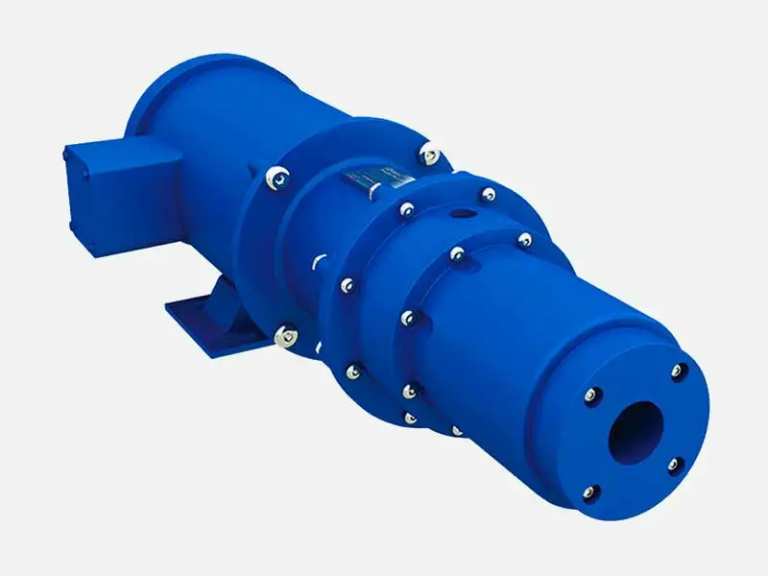
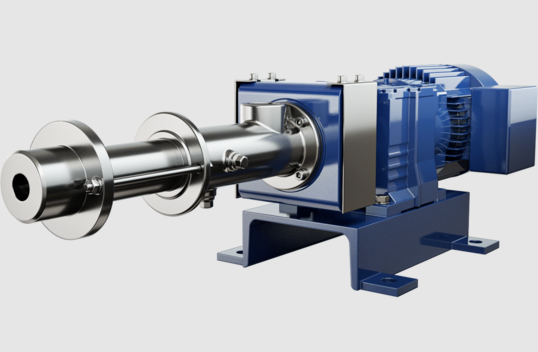
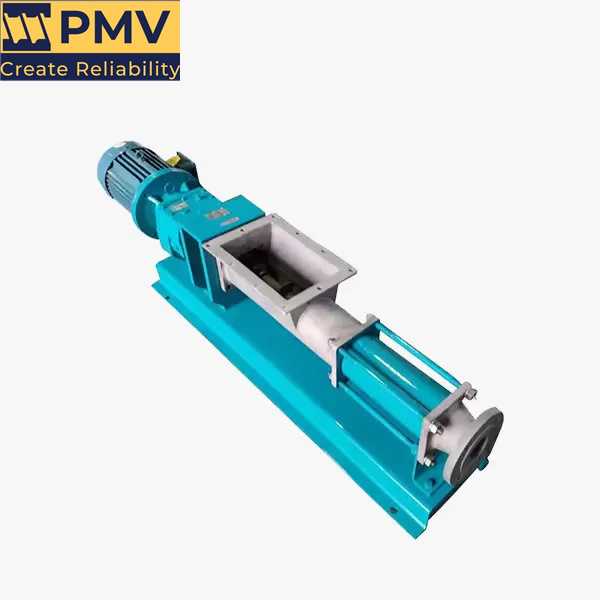
What is the BO/SO progressing cavity pump?

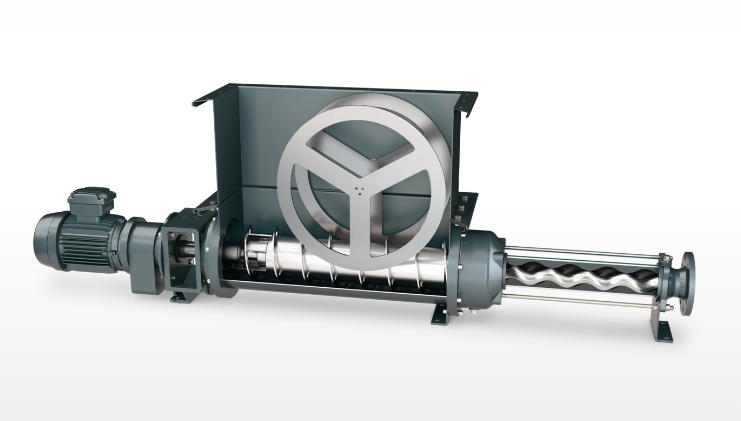
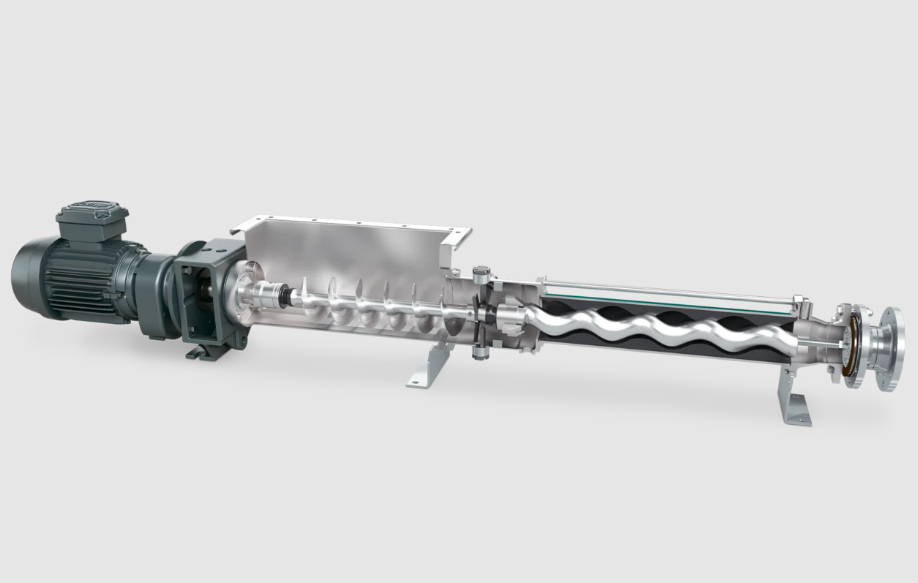
The NEMO® BO/SO progressing cavity pump with hopper and coupling rod with feeding screw and force-feed chamber is employed in almost all branches of industry to  provide continuous, pressure-stable, gentle and low-pulsation conveyance. The hopper housing with cutting unit guarantees optimum feed of chunky medium into the conveying elements. If the medium passes the force-feed chamber with the cutting unit the larger fruits and vegetables are cutted immediately. This unit consists of a rotating knife with three blades and a variable number of stationary knives adjustable to the size and consistency of the particles. 

Feeding through Hopper with Cutting Unit

The hopper housing with cutting unit guarantees optimum feed of chunky medium into the conveying elements. If the medium passes the force-feed chamber with the cutting unit the larger fruits and vegetables are cutted immediately. This unit consists of a rotating knife with three blades and a variable number of stationary knives adjustable to the size and consistency of the particles.

Optionally the pump can be equipped with an additional cutting unit at the discharge flange of the pump. With its perforated disc and rotating knife it allows for further fine definition of the particle size.

As any other NEMO pump also the BO/SO pump has the ability to dose the conveyed media in proportion to rotation speed. In block construction with a flanged drive, this pump is particularly compact and economical. It is also available with bearing housing for a wider range of drives.

Features of the pump

  • Hopper housing with rectangular inlet flange and feeding screw with force-feed chamber to provide optimal feed for slowly flowing and pasty media into the conveying elements
  • Continuous low-pulsation conveyance una ected by fluctuations in pressure and viscosity
  • Conveyance volume in proportion to rotation speed with high dosing precision over a broad rotational-speed range
  • High pressure capability without valves

The Advantage of NEMO® BO/SO Hopper Pump

  • Variable modular system for optimum conveyance and cutting
  • Robust and compact construction
  • Constant flow
  • Ease of service
  • Replacing additional machinery
Hopper Pump Diagram
Hopper Pump Diagram

[video_lightbox_youtube video_id=”-0W7iCNq_5Q&rel=0″ width=”640″ height=”480″ alt=”Hopper Pump” anchor=”https://pumpvv.com/wp-content/uploads/2023/05/Hopper-Pump-with-Cutting-Device-Cover.png”]

People Also Ask

A progressing cavity pump excels when handling highly viscous fluids which are required to be moved long distances (discharge pressure up to 48 bar). Typical fluids may include slurry, mashes, pulps, dough from waste water treatment plants, anaerobic digestion facilities and paper recycling plants.

A Progressive Cavity Pump is a type of a positive displacement pump which has a rotor rotating within a housing called a stator. The rotor is always metallic and the stator is made up of a rubber type of material.

The advantages of a progressive cavity pump are the ability to pump highly abrasive fluids and fluids with large solids and have reasonably long service life on these difficult pumping applications.

Typically, PCPs deliver 80% total system efficiency— the ratio of lifting power to input power—much higher than other artificial lift methods such as rod pumps, ESPs, jet pumps, and gas lift.

Fill up and submit the below inquiry form, or directly write us an email: info@pumpvv.com
Similar Posts

  • High Pressure Progressive Cavity Pumps

    Progressive cavity pumps are a vital component in many industrial applications, particularly when it comes to handling viscous fluids and slurries. These pumps are designed to operate efficiently under high pressure, making them ideal for a variety of demanding environments. In this article, we will explore the key features, advantages, and applications of high pressure…

  • SEEPEX BNA – API 676 STANDARD PUMP

    SAFE OIL AND GAS PUMPING Built for the highest expectations: BNA progressive cavity pumps are designed for the high requirements of the oil and gas industry. With their robust, heavy-duty cast housings, they optimally fulfill the requirements of the American Petroleum Institute (API). Corrosion-resistant materials such as Super Duplex are standard. People Also Ask

  • BN35-6L stator seepex

    Design features of seepex BN35-6L Stator The seepex BN35-6L stator is a key component of a screw pump, and its design is based on advanced fluid dynamics. Made of high-quality materials, the BN35-6L stator has excellent wear and corrosion resistance, which makes it perform well in harsh working environments. Whether it is handling viscous fluids…

  • Progressing Cavity Pumps

    What are Progressing Cavity Pumps? Progressing cavity pumps, also known as PC pumps or screw pumps, are a type of positive displacement pump that uses a single rotating element to move fluids through a sequence of small, fixed-shape cavities. They are commonly used in various industries for fluid transfer applications due to their ability to…

  • Progressive Cavity Pump in Bearing Block Design Construction

    Progressive Cavity Pump in Bearing Block Design Construction Q=0.5-150 m³/h (2.2 USGPM – 660 USGPM) P=0~4.8 Mpa (0~700 psi) What is a progressive cavity pump in bearing block design construction ? The progressive cavity pump in bearing block design has one more bearing seat than the direct-connected progressive cavity pump, and the bearing seat is connected with…