Netzsch NM038BY01L06B Netzsch Instruments
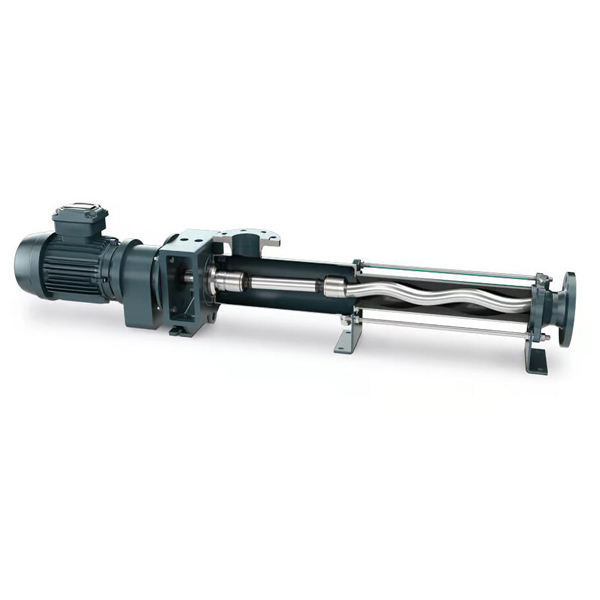
NETZSCH NM038BY01L06B

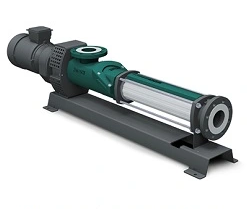
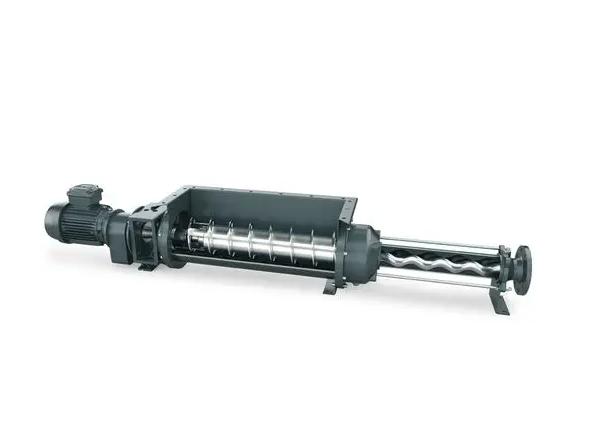
Netzsch NM038BY01L06B by block pump in industrial design can be used in environmental technology, the food and chemical industries, but also in the oil & gas upstream as well as the mid- /downstream sector for a wide variety of pressure-stable conveying or dosing tasks.

From low-viscosity media to hardly flowing products, with or without solid content, shear-sensitive, sticky or abrasive, with the NEMO BY progressing cavity pump even difficult substances can be conveyed gently and with low pulsation, regardless of fluctuations in pressure and viscosity.

The Features Of NETZSCH NM038BY01L06B

The NEMO NM038 in industrial design can be used in environmental technology, the food and chemical industries, but also in the oil & gas upstream as well as the mid- /downstream sector for a wide variety of pressure-stable conveying or dosing tasks.Nemo Pumps

The working principle of NETZSCH NM038BY01L06B

  • From low-viscosity media to hardly flowing products, with or without solid content, shear-sensitive, sticky or abrasive, with the NEMO® BY progressive cavity pump even difficult substances can be conveyed gently and with low pulsation, regardless of fluctuations in pressure and viscosity.
  • The progressing pump guarantees flow rates proportional to speed with high dosing accuracy over the entire speed range. In block design with flanged drive, this NETZSCH NEMO Pump is especially compact and economical. Moreover, the NEMO® BY is distinguished by its low investment, operating and maintenance costs. Four rotor/stator geometries are available for the various products and applications.

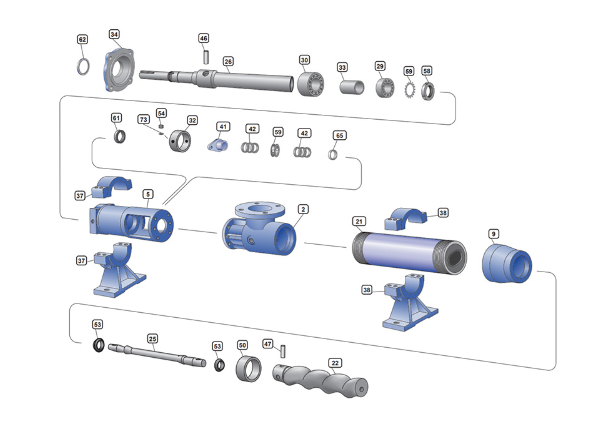
NETZSCH NM038BY01L06B Specification List/NETZSCH NEMO Pump Parts List

ManufacturerPMV
INLET/OUTLET CONNECTION TYPEFlange
INLET SIZE3 in x 2.5 in
MOTOR VOLTAGE230-460 VAC
HORSEPOWER3
progressive cavity pump diagram
nm038by01l06b netzsch progressive cavity pump diagram

[video_lightbox_youtube video_id=”JWkoODah0vY&rel=0″ width=”640″ height=”480″ alt=”NETZSCH Progressive Cavity Pump” anchor=”https://pumpvv.com/wp-content/uploads/2023/03/pump-cover1.png”]

People Also Ask

A progressive cavity pump is used when the pumping application is not suited to a centrifugal pump. One of the clearest examples of when to use a progressive cavity pump is when the liquid has a higher viscosity, or thickness, than water.

As the rotor turns and contacts the surface of the stator, a series of small cavities begin to form. The fluid “progresses” through these cavities until it is expelled through a discharge outlet.

These differ from a progressive cavity pump in that they are typically used for pumping lubricating fluids. Screw pumps are all metal pumps and are typically used for nonabrasive fluids. They also can pump at much higher discharge pressures that a progressive cavity pump.

Typically, PCPs deliver 80% total system efficiency— the ratio of lifting power to input power—much higher than other artificial lift methods such as rod pumps, ESPs, jet pumps, and gas lift.

Send Your Enquiry :

Similar Posts

  • BN26-6L stator seepex

    Working principle The working principle of the Seepex BN26-6L stator is based on advanced screw pump technology. When the pump is running, the rotor rotates inside the stator to form multiple closed fluid chambers, and the fluid is effectively transported between the inlet and outlet through the movement of the screw. This method allows the…

  • BN15-6L rotor seepex

    Working Principle The working principle of the BN15-6L rotor is based on the fundamental operation of screw pumps. Driven by a motor, the rotor rotates, creating a sealed chamber between the rotor and the stator that transports the medium from the inlet to the outlet. As the rotor spins, the medium is progressively compressed in…

  • Low NPSH Progressive Cavity Pump

    Introduction Progressive cavity pumps are widely recognized for their ability to handle various fluids, including those with high viscosities and solids. However, one of the critical factors affecting their performance is the Net Positive Suction Head (NPSH). A low NPSH progressive cavity pump addresses specific challenges in applications where traditional pumps may struggle. Understanding NPSH…

  • NM063BY02S12B Rotor

    Rotor design: The manufacturing process of the rotor is very precise, and the gap between the rotor and the stator is controlled within a range of only tens of microns. This extreme dimensional accuracy not only effectively reduces leakage and backflow losses, but also ensures the high efficiency of the pump. The rotor is made…

  • BN200-6L rotor seepex

    Design and Features of Seepex BN200-6L Rotor The Seepex BN200-6L rotor is a rotor that uses screw pump technology and has powerful fluid handling capabilities. This pump rotor can effectively reduce the shear force of the fluid in the pump through the precise spiral structure design, ensuring that its original characteristics are maintained when conveying…

  • Design of Progressive Cavity Pumps

    Progressive cavity pumps are widely used for transferring viscous fluids in various industries. Their unique design allows for efficient handling of challenging materials, making them a preferred choice in many applications. This article will explore the key aspects of designing progressive cavity pumps, including their components, working principle, advantages, and considerations in the design process….